Keep Muscle · Answer guide
How much protein do you need on a GLP-1 medicine?
There is no single protein number that fits every person taking a GLP-1 medicine. Needs depend on body size, age, activity, health and the overall eating plan. The useful starting point is adequate, tolerable protein-containing meals plus resistance exercise—not automatically copying a high target from social media.
Evidence behind this answer
Sources checked November 1, 2026: [1] Four-society advisory: nutritional priorities during GLP-1 therapy, 2025[2] NIH: nutrition and exercise supplements[3] Oikawa et al.: whey versus collagen muscle-protein-synthesis trial, 2020
Why the calculation needs context
Protein recommendations can be expressed in grams per day or per kilogram, but the body weight used in that calculation matters. A number based on actual weight is not interchangeable with one based on another clinical reference. Kidney disease and other conditions may require an individualized approach. The four-society advisory discusses adequate intake during GLP-1 treatment; it does not make one internet target appropriate for everyone.
Start with what you actually eat
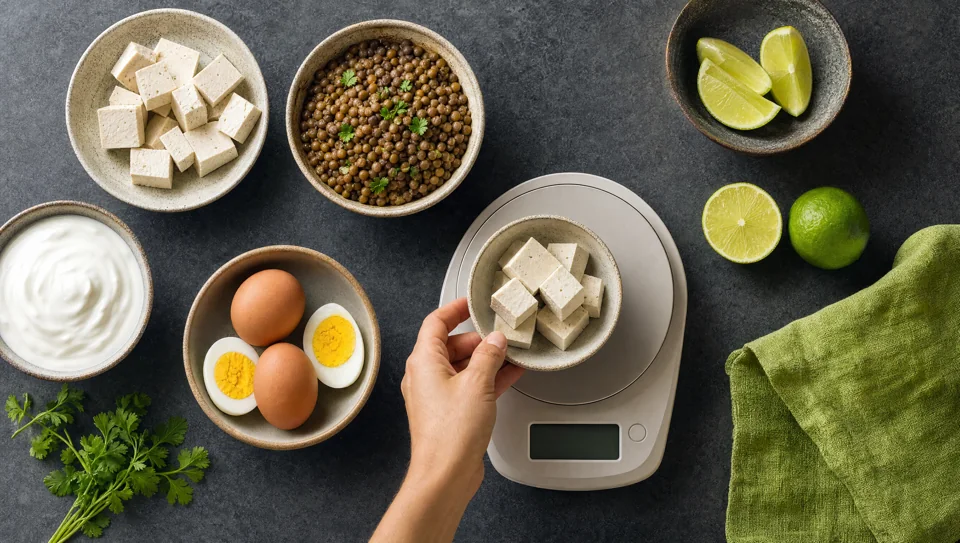
Look at a few ordinary days, including days when appetite is low. Eggs, yogurt, beans, lentils, tofu, fish, poultry and other foods can contribute in different meal patterns. Read the protein amount for the portion actually eaten rather than the package’s entire contents. A small snack labeled “high protein” may not resolve a much wider intake gap. Food preferences, budget and tolerability should shape the plan.
A label example: serving size changes the answer
Suppose a yogurt lists 15 grams of protein per 170-gram serving. Eating 85 grams provides 7.5 grams of protein; eating two full servings provides 30 grams. That is label arithmetic, not a personalized protein prescription. Add the foods actually eaten across meals before deciding that a powder is needed. The optional food calculator on this site can total your own entries without claiming that the result establishes your nutritional needs.
Where shakes and powders fit
A supplement can be convenient when ordinary meals are difficult, but it is not mandatory and does not replace a varied diet. Compare serving size, protein amount, allergens and added ingredients. Collagen is not nutritionally interchangeable with every complete protein source for a muscle goal. Large servings can also be hard to tolerate. Discuss persistent intake problems instead of continually adding supplements around unresolved medication effects.
Pair nutrition with a muscle stimulus
The advisory cautions that increasing protein alone is unlikely to preserve muscle without structured resistance training. Protein is one part of the plan, alongside adequate overall nutrition and activity. If you want a personal target, a registered dietitian can help connect it with your health and meals. Review that target as appetite, weight, treatment and training change, rather than treating it as a permanent number.
Related questions
Do I need a protein shake every day?
No. It can be one convenient food option if appropriate, but ordinary foods can contribute protein and other nutrients.
Is more protein always better?
No. Adequacy, overall nutrition, tolerability and medical context matter. More is not an unlimited guarantee of muscle preservation.
Sources
General information, not an individual diagnosis or treatment plan. Product-specific approval, risks and eligibility must be checked against the current label and clinical assessment. How we publish · Report a correction